Primates in Congo: Diversity, Distribution, and Scientific Challenges
Primates refer to a group of placental mammals belonging to the order Primates, whose presence deeply structures the forest ecosystems of the Congo Basin. These species occupy a variety of ecological niches, from the canopy of dense forests to gallery forests and forest–savanna mosaics, and their distribution depends directly on food availability, vegetation structure, and the degree of human disturbance.
Studying primate populations allows the analysis of measurable ecological processes, including zoochorous seed dispersal, forest regeneration, and plant succession dynamics. Several studies conducted by the Wildlife Conservation Society and the Makokou Research Center show that certain tree species rely on frugivorous primates for more than 60% of their seed dispersal.
Which primate species are present in Congo?
The Republic of Congo is home to 24 primate species. A figure confirmed by recent wildlife inventories conducted in national protected areas. This diversity places the country among the richest zones in Central Africa for observing primates in still-functioning habitats.
Great apes (Hominids)
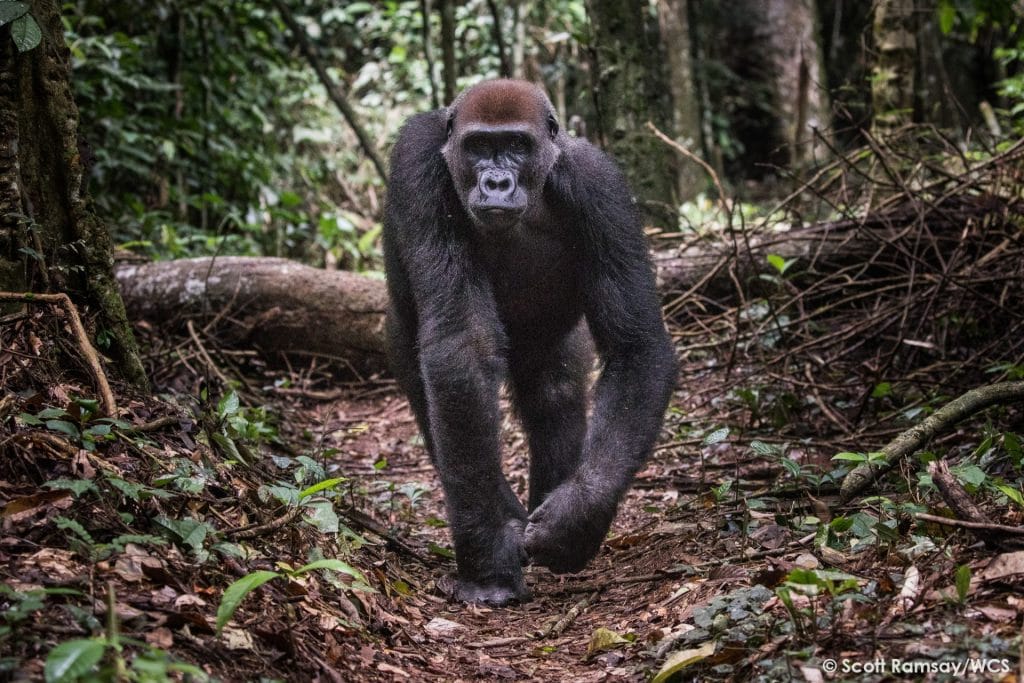
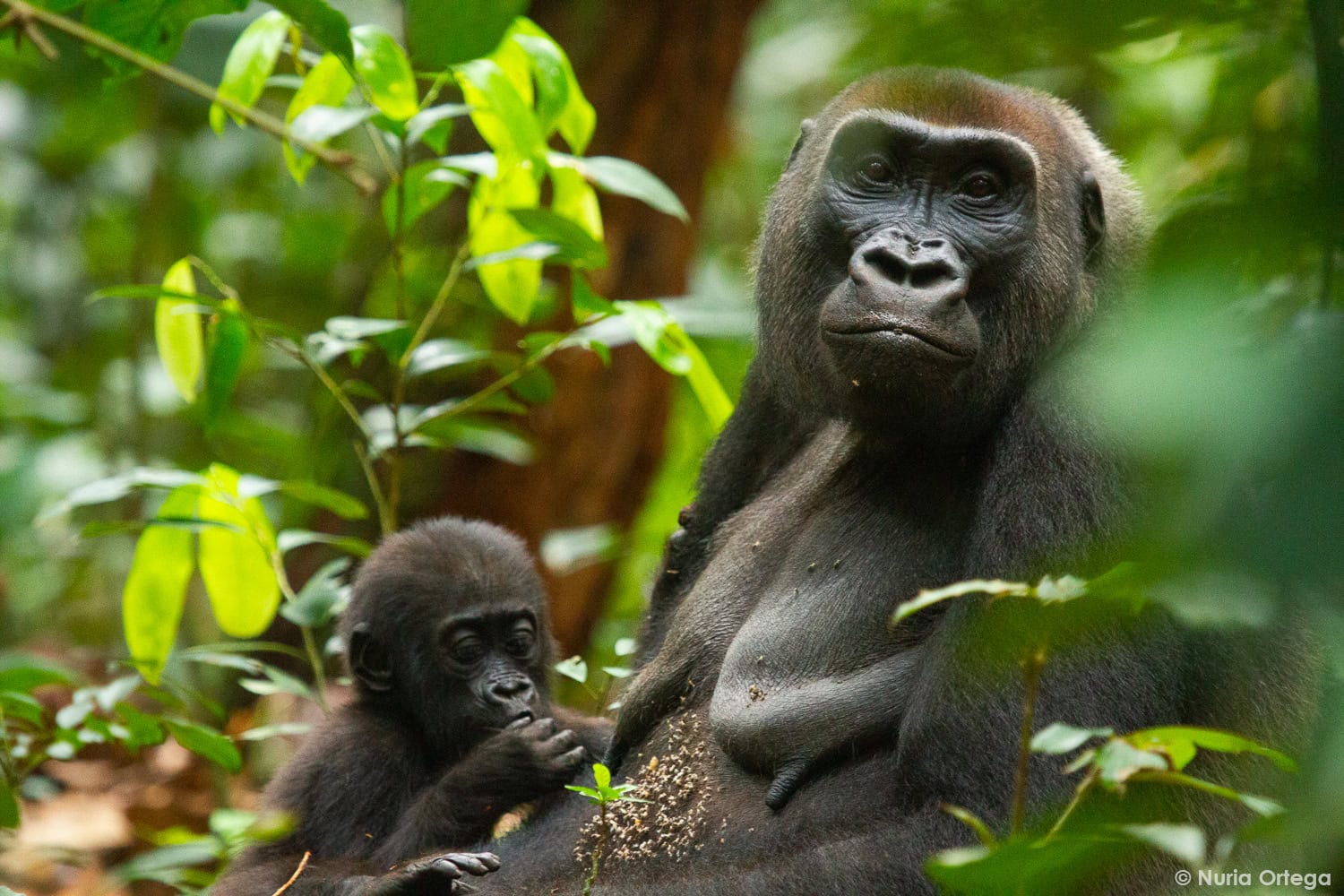
The western lowland gorilla (Gorilla gorilla gorilla) and the central African chimpanzee (Pan troglodytes troglodytes). Are the two recorded great ape species. Gorilla groups generally consist of 20 to 40 individuals organized around a dominant male. While chimpanzees display a fission-fusion structure studied through linear transects and camera traps. The stable presence of primates in Congo’s primary forests is considered a biological indicator of low anthropogenic pressure.
Medium and small-sized monkeys
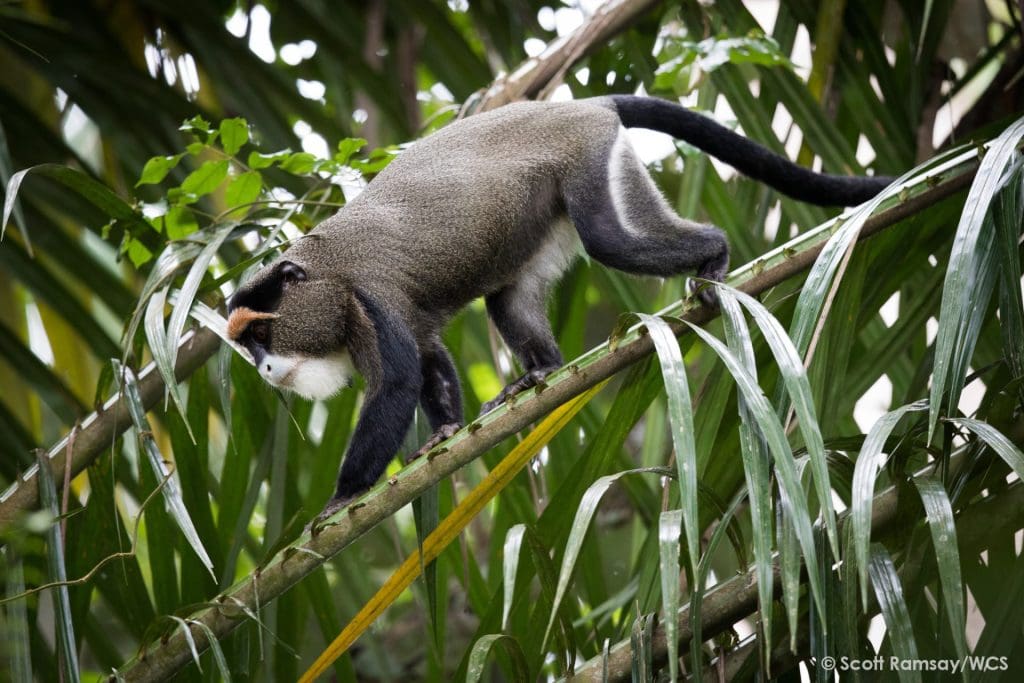
Cercopithecids make up the majority of observed species, including the mandrill (Mandrillus sphinx), the black-and-white colobus (Colobus guereza), De Brazza’s monkeys (Cercopithecus neglectus), talapoins (Miopithecus ogouensis), and the very rare Cercopithecus dryas. These arboreal species consume fruits, leaves, and invertebrates, reinforcing the ecological role of primates in Congo in the vertical structuring of forests.
Where to observe primates in Congo’s protected areas?
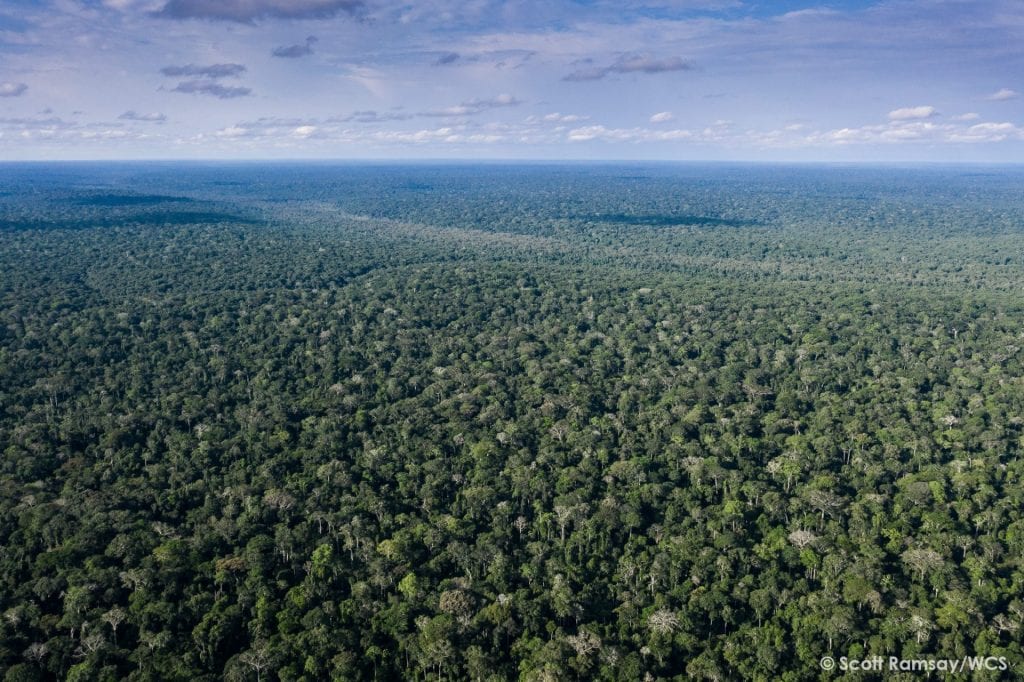
Nouabalé-Ndoki National Park hosts some of the highest primate densities in Congo, thanks to continuous, minimally fragmented primary forest. Scientific monitoring has confirmed the coexistence of more than ten species at a single site.
Odzala-Kokoua National Park is a major study area for the Western lowland gorillas, with forest clearings used for behavioral observation and health data collection. Conkouati-Douli Reserve, in contrast, allows for comparative analysis of primates in mixed habitats including mangroves and coastal areas.
Both parks. Odzala-Kokoua and Nouabalé-Ndoki, have habituated groups that can be tracked with habituation teams. For more information, contact us!
Which species can be encountered during a stay in Congo?
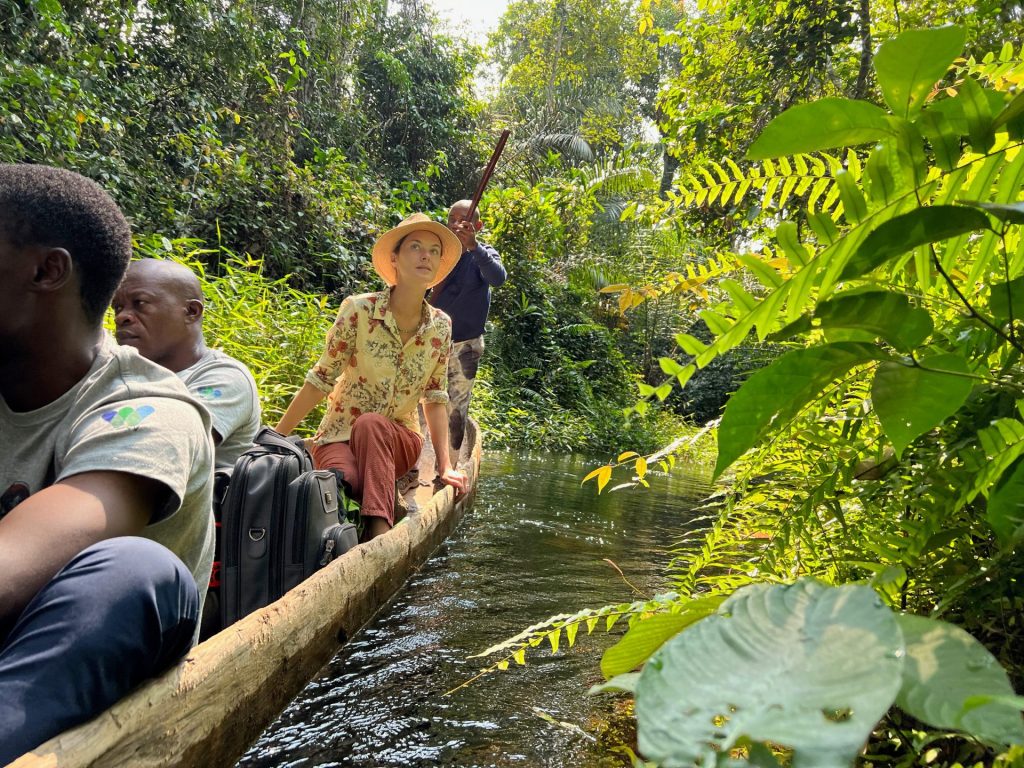
During a stay in Congo. It is possible to venture into the forest to observe The western gorillas, chimpanzees, mandrills, colobus monkeys, and several cercopithecids. Field survey data indicate that some areas, particularly in Nouabalé-Ndoki, host up to 40% of the country’s primate species within a limited area, making them natural laboratories for biodiversity studies.
What practices guide primate observation?
In Congo. Primate observation follows strict protocols aimed at limiting disease transmission and behavioral stress. Research by primatologist Angela Meder has shown that failing to respect minimum distances alters the feeding and social patterns of observed groups, justifying a rigorous and supervised approach.
What is the link between observation and conservation?
The survival of primates depends directly on the conservation of Congo Basin forests, now threatened by illegal logging and poaching. Monitoring programs funded by scientific ecotourism contribute to population surveillance and the collection of essential data for long-term management plans.
What insights does studying primates in Congo provide?
Understanding primates means analyzing a complete ecological system, where each species acts as a functional link. From great apes to the smallest cercopithecids, these primates provide key information on the conservation status of Congolese forests and their ability to withstand future environmental pressures.