Mangabeys: Hidden Architects of African Tropical Forests
Mangabeys are catarrhine primates belonging to the family Cercopithecidae, subfamily Cercopithecinae. They form a distinct group within Old World monkeys, characterized by morphology intermediate between arboreal cercopithecines and terrestrial baboons. From a taxonomic perspective, mangabeys are divided into two main genera: Lophocebus (crested mangabeys) and Cercocebus (white-eyelid mangabey).
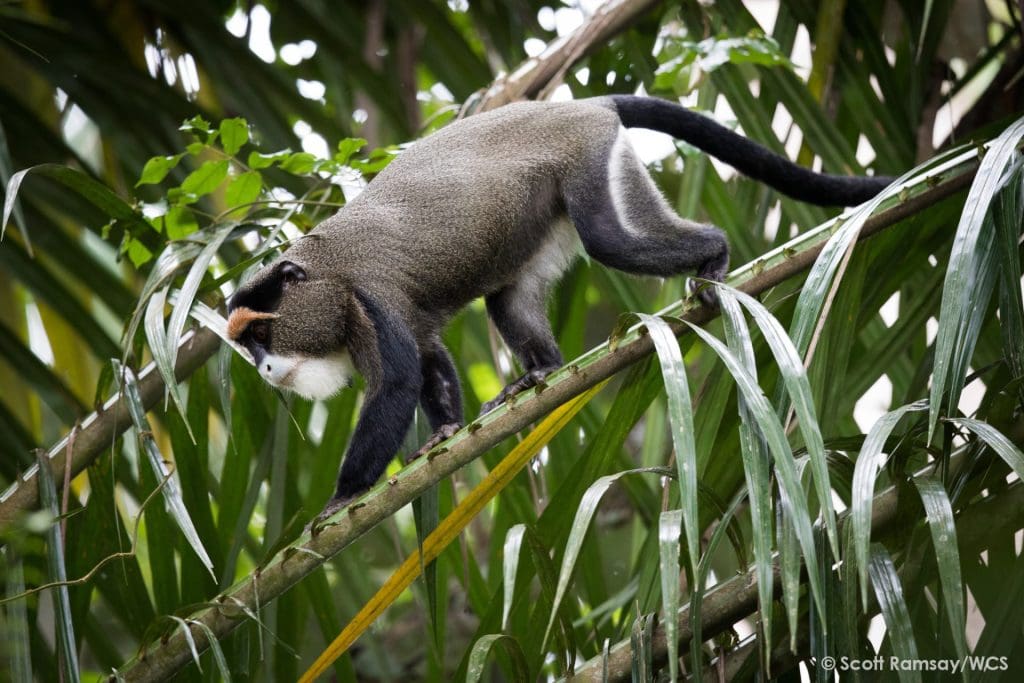
Species of the genus Lophocebus are mostly arboreal, with long non-prehensile tails, prominent cranial crests, and high agility in the canopy. In contrast, Cercocebus species have more robust bodies, developed musculature, and strong dentition, adapted to harder diets and a partially terrestrial lifestyle.
From an evolutionary standpoint, mangabeys occupy a key position in the adaptive radiation of African cercopithecines. Their morphological and behavioral diversity reflects the extreme ecological complexity of African tropical forests, particularly those of the Congo Basin.
Which Mangabeys Can be Observed in Central Africa?
Central Africa is the main center of mangabey diversity, with five confirmed species present in the Congo Basin. These species belong to the two recognized genera and show distinct ecological adaptations.
Observable species include:
- Grey-cheeked Mangabey (Lophocebus albigena)
- Black Crested Mangabey (Lophocebus aterrimus)
- Golden-bellied Mangabey (Lophocebus chrysogaster)
- Agile Mangabey (Cercocebus agilis)
- White-collared Mangabey (Cercocebus torquatus)
These species do not share the same ecological niches. Some are strictly forest-dwelling and arboreal, while others extensively exploit the forest floor. Their coexistence is made possible by fine partitioning of food resources, movement heights, and activity periods.
The observed species richness in Central Africa is directly linked to the historical climatic stability of the Congo Basin, which served as a biological refuge during glacial periods. This stability promoted the diversification of forest primates.
The loss of connectivity between central forests threatens this ancient balance. Protecting these species is preserving a biological heritage shaped over millions of years.
Where Can Mangabeys Be Observed in Central Africa?
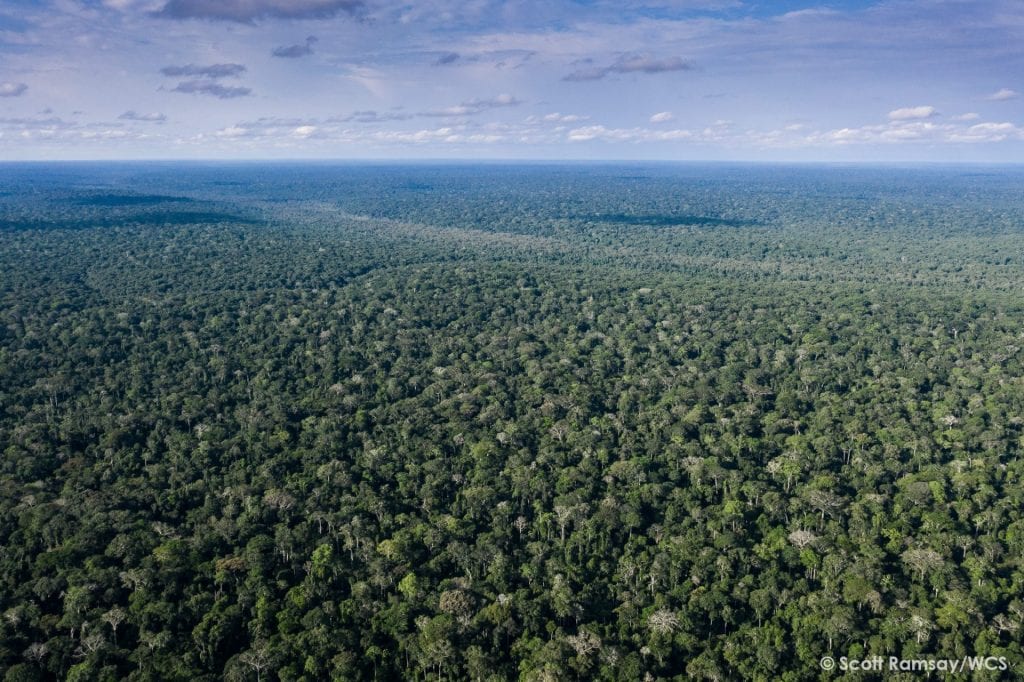
Mangabeys occupy a wide variety of forest habitats, but their distribution remains strictly linked to ecosystem integrity. They are mainly observed in:
- Dense humid tropical forests
- Swamp forests
- Mature secondary forests
- Certain undisturbed riverside areas
Key countries for observation include the Republic of Congo, the Democratic Republic of Congo, Gabon, southern Cameroon, and Equatorial Guinea. National parks, certified forest concessions, and protected community areas are the main current refuges.
The presence of mangabeys strongly depends on forest continuity. Arboreal species disappear quickly from fragmented areas, while terrestrial species are particularly vulnerable to hunting along forest tracks.
Mangabey Lifestyle and Social Organization
Mangabeys have a complex social organization, generally structured in multimale–multifemale groups ranging from 10 to over 40 individuals. Group cohesion relies on frequent social interactions: grooming, vocalizations, postural signals, and affiliative behaviors.
Arboreal species spend most of their time in the middle and upper canopy, while terrestrial species exploit the understory and forest floor. Their diet is opportunistic and omnivorous, including fruits, hard seeds, leaves, insects, and occasionally small vertebrates.
Mangabeys play a key role in forest dynamics through their daily movements, often covering several kilometers. Their diurnal activity is closely linked to the fruiting cycles of tropical trees. Disruption of forest cycles (selective logging, roads) directly affects their social organization and reproduction, compromising long-term population survival.
Mangabeys in the Congo Basin
Mangabeys ensure seed dispersal, especially for hard-shelled or large seeds that few other animals can consume and spread effectively. They also contribute to forest soil dynamics by foraging in leaf litter, promoting soil aeration, which improves germination and nutrient recycling. Their presence influences floristic composition and natural forest regeneration.
They occupy an intermediate position in trophic networks, serving as prey for certain large predators while regulating populations of insects and small invertebrates. The disappearance of mangabeys would cause major ecological imbalances, affecting the very structure of Congo Basin forests.
Are Mangabeys Endangered?
All Central African mangabey species now face increasing anthropogenic pressures. According to the IUCN, several species are classified as Vulnerable, Near Threatened, or Endangered, mainly due to deforestation, hunting, and habitat fragmentation.
Commercial bushmeat hunting is a direct threat, especially for terrestrial species. Habitat loss from unsustainable logging and agricultural expansion isolates populations and reduces genetic diversity. Mangabeys have slow reproductive rates, limiting their ability to recover quickly after declines.
Protecting the Congo Basin forests is not only about biodiversity but also about global ecological stability. Mangabey survival depends directly on the conservation of these forests, an irreplaceable natural heritage of humanity.
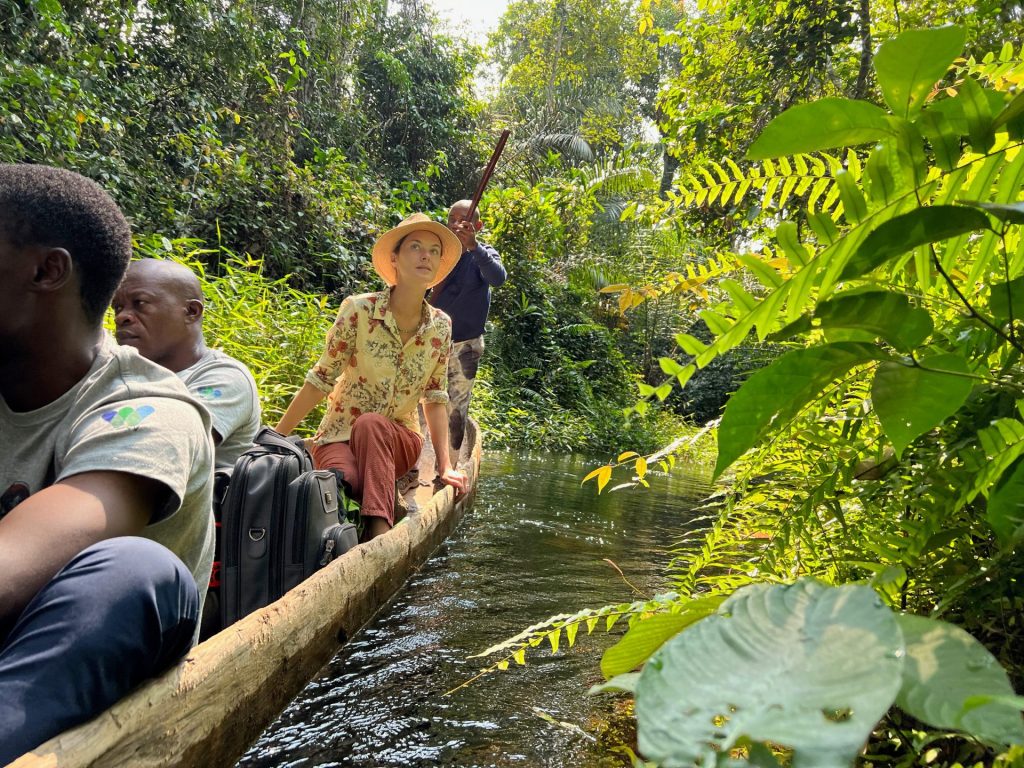
During expedition cruises in the Congo Basin, it is possible to track mangabeys in Dzanga-Sangha National Park in the Central African Republic. A golden-bellied mangabey specimen is also visible at the Brazzaville Zoo.