Discovering the Alima river: A Hydrological and Ecological Jewel of the Congo
The Alima River is one of the Congo’s most remarkable treasures. Both for its hydrological significance and its ecological role. Its flow ranges from 250 to 700 m³/s depending on the season, with water pressure varying along its course, creating numerous microhabitats that support diverse aquatic species.
The river’s brownish, slightly turbid color comes from naturally transported sediments, which directly influence fish, invertebrates, and other aquatic organisms. These unique conditions make the Alima a dynamic and rich ecosystem, where each section possesses distinct physical and biological characteristics. For travelers, exploring the Alima offers insights into aquatic life and the interactions between humans and nature, from riverside villages and traditional fishing practices to protected areas where biodiversity thrives. Boat excursions reveal not only the river’s scenic beauty but also the ecological complexity of a system that plays a crucial role in the Congo Basin.
Where does the Alima river originate?
The Alima originates in the plateaus and forests of north-central Congo. Numerous small streams converge to form an initially clear, moderate-flowing river, marking the beginning of this fascinating waterway. These upstream conditions support the reproduction and development of many aquatic species. Including tilapia and African catfish (Synodontis), recognizable by their barbels, as well as amphibians and invertebrates. These species are essential to the local food web and contribute to the river’s ecological richness.
What is the course of the Alima river?
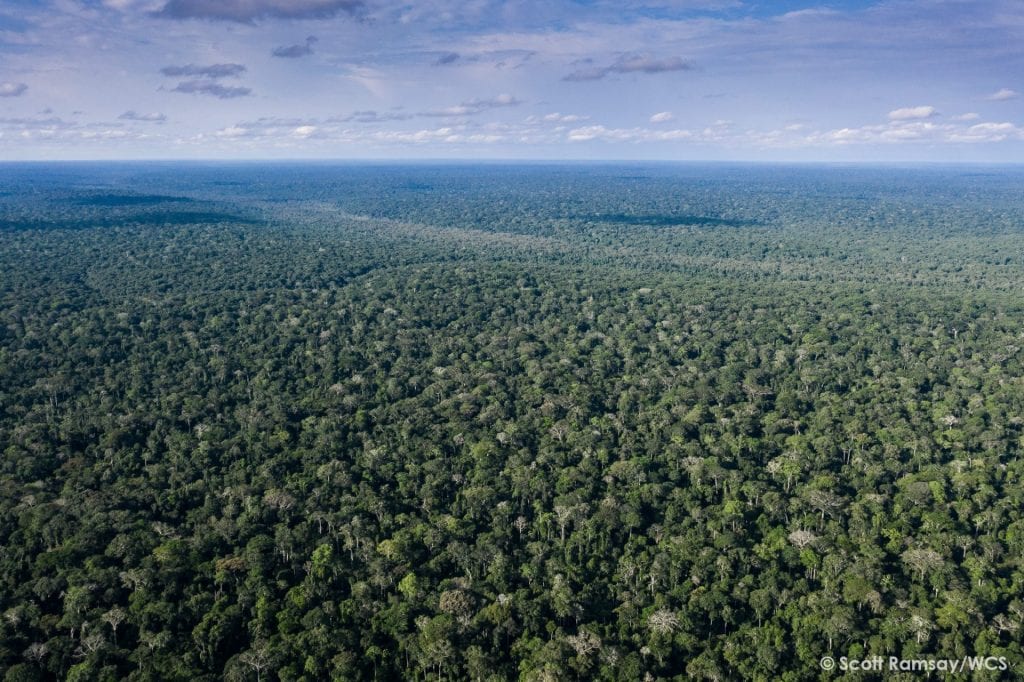
The Alima flows approximately 400 kilometers before joining the Congo river about 150 km downstream of Oyo in the Cuvette Department. Its course traverses wooded plateaus. Dense tropical forests, and expansive wetlands characteristic of the Congo Basin.
In the upper reaches, the river is narrow and fast-flowing, favoring species adapted to well-oxygenated water. Such as Alestes and Distichodus, and limiting sediment deposition. Downstream, the river widens, slows, and meanders through floodplain forests. These calm areas support aquatic plants, including water lilies and floating vegetation, and serve as breeding grounds for numerous fish species.
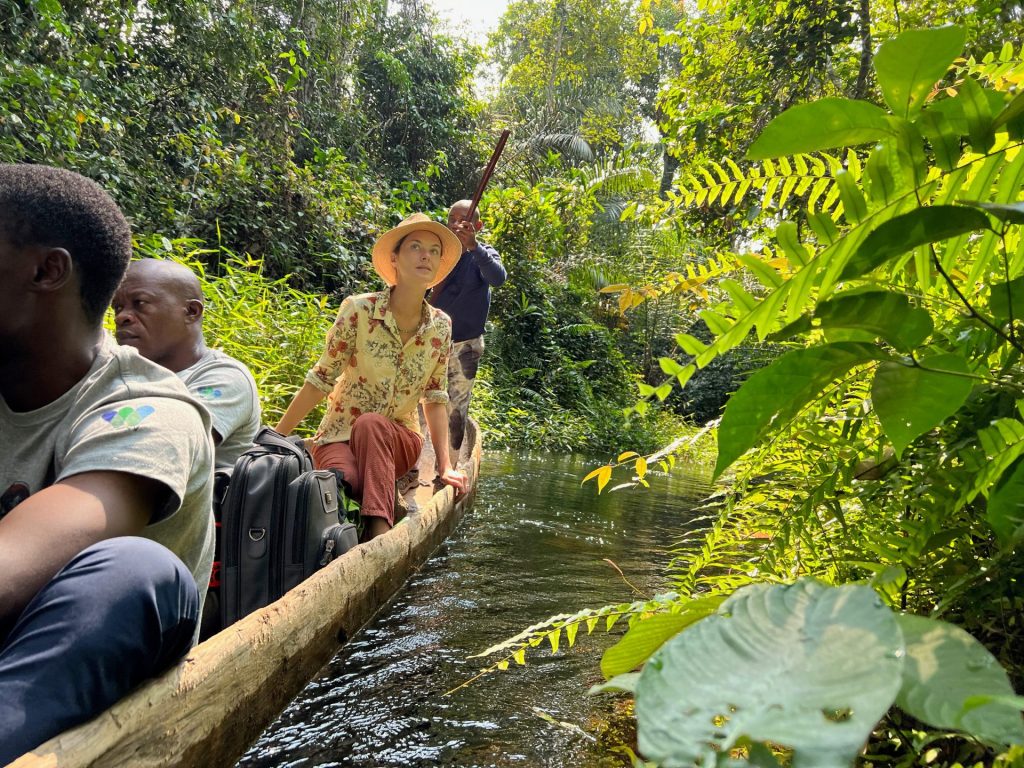
Throughout its course. The Alima passes through many villages, serving as a vital transportation route. Canoes are used to transport people, smoked fish, cassava, and timber between often isolated communities. For travelers, following the Alima by canoe provides a direct reading of the Congolese landscape, alternating between primary forests, cultivated clearings. Fishing villages, and riverine markets, while also illustrating the transition from forested areas to wetland ecosystems.
Which tributaries feed the Alima river?
The Alima is nourished by a dense network of tributaries, including permanent secondary rivers and seasonal streams from forested plateaus and wetlands. These tributaries join the Alima at various points, primarily in the upper and middle reaches.
Hydrologically, they regulate flow: during the rainy season, they absorb and redistribute heavy rainfall, preventing sudden water-level fluctuations. While permanent tributaries maintain a minimum flow in the dry season, ensuring navigability and water access for riverside communities.
Ecologically. These tributaries are vital spawning grounds for fish. Calm, shallow waters provide nurseries for tilapia and catfish, whose juveniles later migrate to the main river during rising water levels. Tributaries also deliver organic matter leaves. Plant debris, and insects that forms the base of the aquatic food web. Wetlands at tributary mouths encourage the growth of aquatic plants, amphibians, and waterbirds, serving as feeding, breeding, and refuge zones.
For humans. Tributaries structure settlement patterns. Villages often develop along these secondary waterways, facilitating fishing, irrigation of cassava or maize, and domestic water use. Tributaries also serve as local transport routes connecting villages to the main river. For observers, the Alima’s tributaries reveal that the river is not an isolated system but a network of interconnected waterways, each shaping ecological and human life in the basin.
What wildlife can be observed along the Alima river?
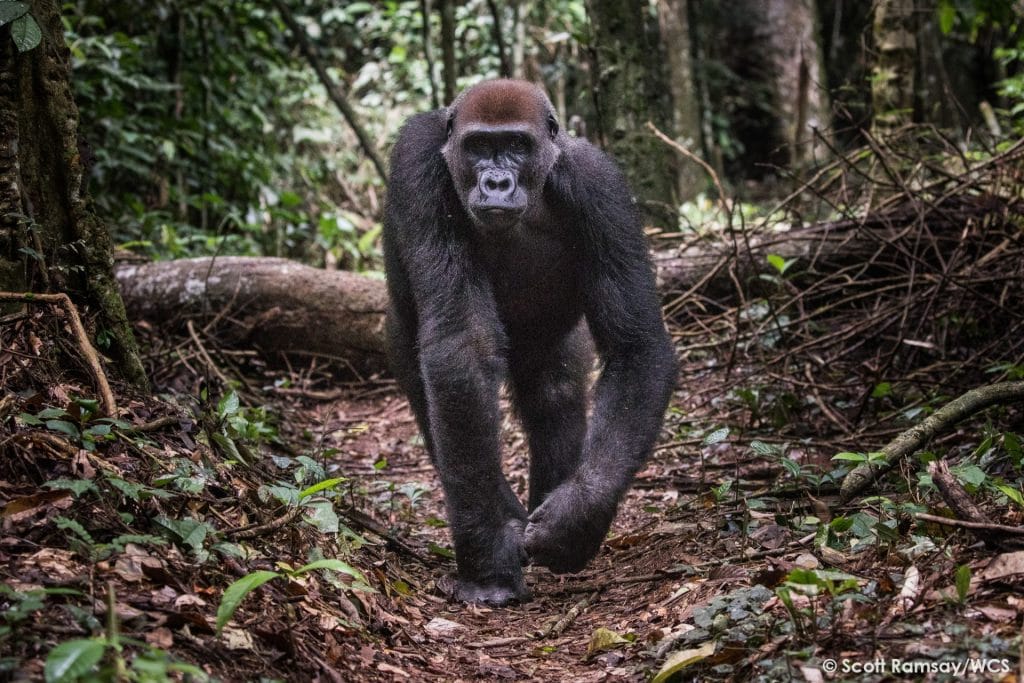
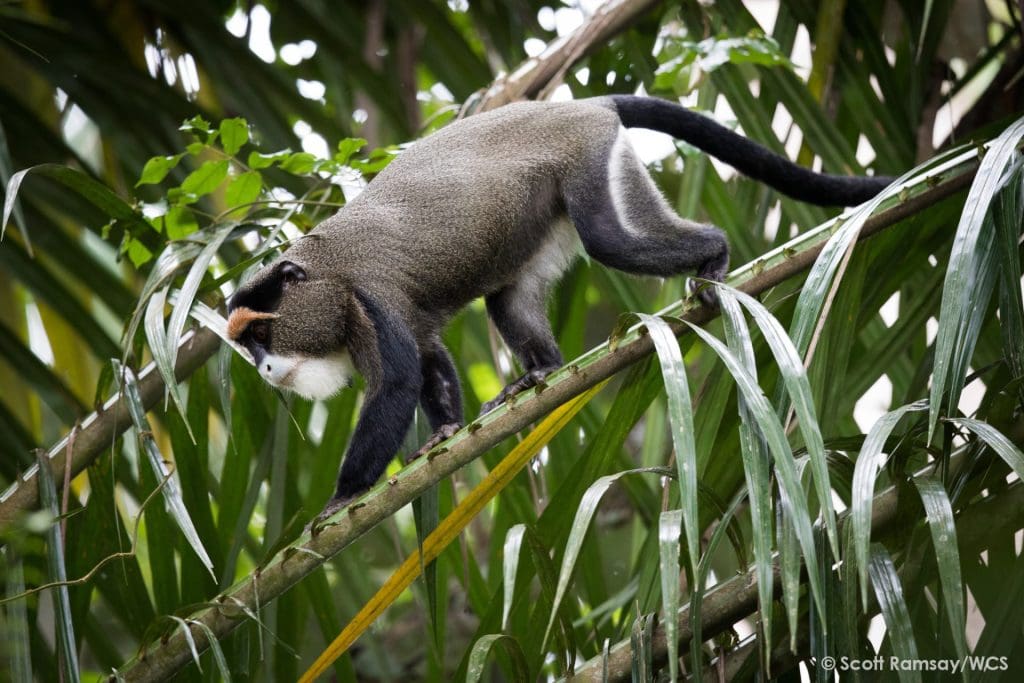
Riverside forests host several primates. including De Brazzas’ monkey (Cercopithecus neglectus), moustached monkey (Cercopithecus cephus), and black-and-white colobus (Colobus guereza). Forest antelopes, especially duikers like the blue duiker (Philantomba monticola), are also present.
Birdlife includes both waterbirds and forest species, such as the malachite kingfisher (Corythornis cristatus). Goliath heron (Ardea goliath). Tittle egret (Egretta garzetta), and various hornbills.
Calm river sections and associated wetlands are frequented by common hippopotamus (Hippopotamus amphibius) and semi-aquatic reptiles like the Nile crocodile (Crocodylus niloticus) and African dwarf crocodile (Osteolaemus tetraspis). Species distribution depends on current speed. water turbidity, depth, and seasonal flood dynamics.
How can the Alima and its tributaries be explored?
The most effective way to explore the Alima is by water. Expeditions such as Les Expéditions Ducret offer long-distance river cruises from Brazzaville to Oyo. Following the Congo River before ascending the Alima. Providing a gradual immersion into the Congo Basin’s ecosystems.
Onboard, travelers can observe flow variations, turbidity, and aquatic habitats’ evolution, identifying floodplains, sediment banks, secondary channels, and fish breeding areas. This approach also facilitates observation of waterbirds like goliath herons, malachite kingfishers, little egrets, African cormorants (Phalacrocorax africanus). And black-faced ibis (Threskiornis melanocephalus), as well as semi-aquatic mammals and reptiles.
Motorized canoe excursions allow closer access to tributaries, shallow waters, and marshy areas, enabling detailed observation of microhabitats and wildlife inaccessible to larger boats. Forest tracks occasionally provide access to villages or specific sites, although seasonal conditions can limit overland travel.
Exploring the Alima with guided expeditions combines in-depth river navigation, wildlife observation, and immersion in riverside communities while respecting natural constraints.
What is the historical and cultural significance of the Alima river?
Historically, the Alima has been a major transportation route connecting villages and communities in the Congo Basin. It enabled trade in agricultural products (cassava, yams, plantains), dried fish, timber, and local crafts. Linking settlements often isolated by dense forests.
Oyo’s river port remains a strategic trade hub connecting populations of the Cuvette and Plateaux. Upstream merchants bring smoked fish, dried caterpillars, palm oil, and cassava, while manufactured goods arrive via the Congo River.
Artisanal fishing dominates, using nets. Lines, traps, and temporary weirs according to the season. Agriculture depends on the Alima’s floods, which naturally fertilize riverbanks. Key crops include cassava, maize, peanuts, bananas, and lowland rice.
Culturally, the river is a symbol of local identity, integral to fishing rituals, community celebrations, and traditional ecological knowledge. It has also been a crossroads of migration and cultural exchange, where languages, farming techniques, and artisanal traditions were shared. Understanding the Alima involves appreciating the historical interdependence of water, biodiversity, and human life, which continues to shape local lifestyles today.
Why is the Alima River unique?
The Alima’s uniqueness lies in the diversity and balance of its ecosystems. Seasonal variations in turbidity, flow. And water pressure create a mosaic of habitats fast-flowing oxygenated sections, calm wetlands, temporary sandbanks, and flooded forests that support fish (tilapia, mormyrids, catfish). Amphibians (Hyperolius, Ptychadena), birds (herons, kingfishers, hornbills), as well as hippopotamuses and crocodiles.
The river also plays a socio-cultural role: linking villages, supporting artisanal fishing and agriculture, and preserving traditional knowledge of sustainable natural resource use. Exploring the Alima provides a technical, scientific, and immersive experience, revealing the intricate interplay of hydrology, biodiversity, and local culture in a largely pristine Congo Basin environment.