The Okapi, The Forest Giraffe, an Invisible Sentinel of Biodiversity in the Congo Basin
The okapi (Okapia johnstoni) is a mammal endemic to the humid tropical forests of the Democratic Republic of the Congo and the closest living relative of the giraffe. It belongs to the family Giraffidae, representing a unique evolutionary lineage that illustrates the diversification of large African ruminants. Despite its zebra-like appearance due to the striped pattern on its legs and hindquarters, the okapi displays distinct anatomical traits: a long, flexible neck, a prehensile tongue measuring up to 30 cm capable of grasping leaves and buds, and dentition adapted to chewing tough vegetation.
The okapi is solitary and territorial, with limited interactions between males and females outside the breeding period. Its life cycle is closely tied to dense forest ecosystems, making it extremely sensitive to environmental disturbances. From an evolutionary perspective, the species is a living testimony to the biological history of the Congo Basin, having undergone very little morphological change over millions of years.
Habitat and Observation Areas of the Okapi
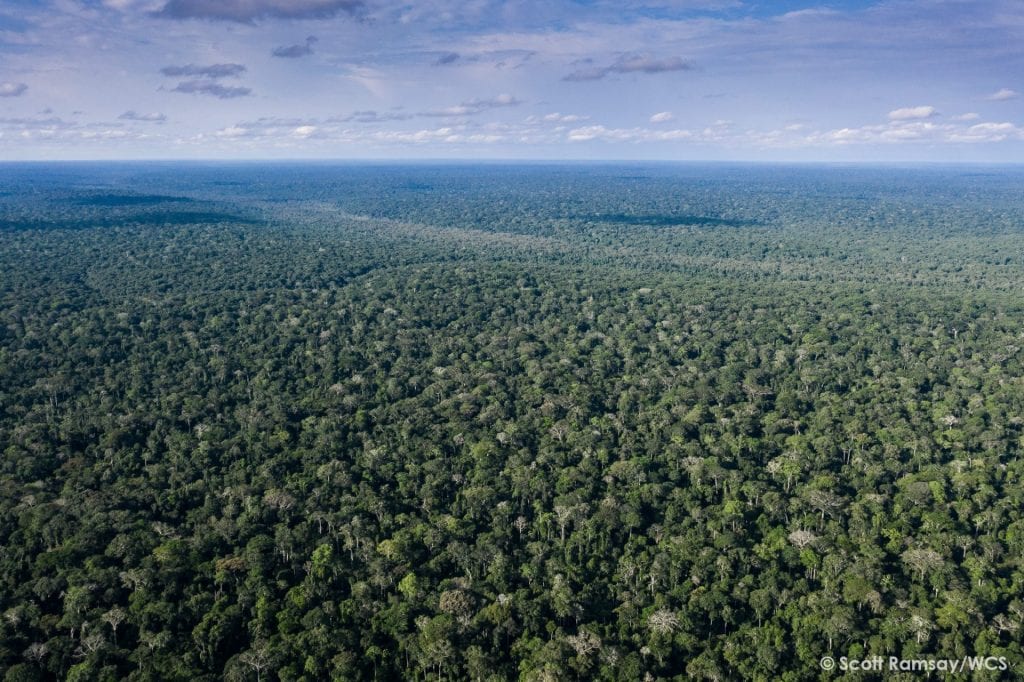
The okapi is strictly endemic to the DRC, mainly concentrated in the northeastern and central regions of the country, particularly within the Okapi Wildlife Reserve, a UNESCO World Heritage Site. It primarily inhabits mature primary forests, forested swamps, and vegetation-rich riverine zones. Forest density and continuity directly determine its presence, as populations are absent from heavily fragmented or exploited areas.
This species is crepuscular and partially nocturnal, making direct observation extremely rare. Scientists and conservationists rely on camera traps and indirect surveys to study population distribution and behavior. Increasing forest fragmentation due to logging and subsistence agriculture threatens movement corridors, limiting genetic exchange between populations.
Behavior of the Okapi
The okapi is solitary and territorial, with males occupying ranges that overlap with several females. It is mainly active at dawn and dusk, feeding on leaves, buds, lianas, and fallen fruits. Its prehensile tongue allows it to reach inaccessible branches and to clean its eyes and ears an adaptation unique among large African herbivores.
Females raise their calves alone, hiding them for several weeks to protect them from predators. Males communicate through scent marking and pheromones to define territories and signal their presence to females. This discreet behavior is an evolutionary response to predation pressure and life in dense forests.
Ecological Role of the Okapi
The okapi is a key ecological actor in African tropical forests. Its varied diet enables it to actively participate in seed dispersal, supporting natural forest regeneration and plant diversity. Leaves and fruits consumed and later deposited enrich forest soils, improving structure and fertility.
As an indicator species, the okapi reflects the overall health of primary forests: its presence signals an intact and functional ecosystem. The loss of okapis would lead to major ecological imbalances, affecting numerous plant and animal species that depend on the same forest environment.
Reproduction of the Okapi
The okapi has a long gestation period of 14 to 16 months, one of the longest among African ruminants. Females give birth to a single calf, which remains hidden for several weeks. Newborns are already capable of standing and moving through dense vegetation shortly after birth.
Males may coexist with multiple females within their territory, though interactions remain rare and strictly related to reproduction. Pheromones and scent markings regulate mating. This slow reproductive rate, combined with low natural population density, makes the species particularly vulnerable to habitat loss and poaching.
Threats and Conservation of the Okapi
The okapi is classified as Endangered by the IUCN. Its main threats include:
- Deforestation for logging, agriculture, and mining
- Illegal hunting for bushmeat or trade
- Armed conflicts that limit monitoring and protection
Forest fragmentation isolates populations, reducing genetic diversity and increasing the risk of local extinction. Slow reproduction and low offspring numbers make recovery difficult after disturbance.
Strengthening the protection of national parks and forest corridors, while promoting sustainable forest management in the Congo Basin, is essential for the survival of the okapi and the preservation of African tropical ecosystems.