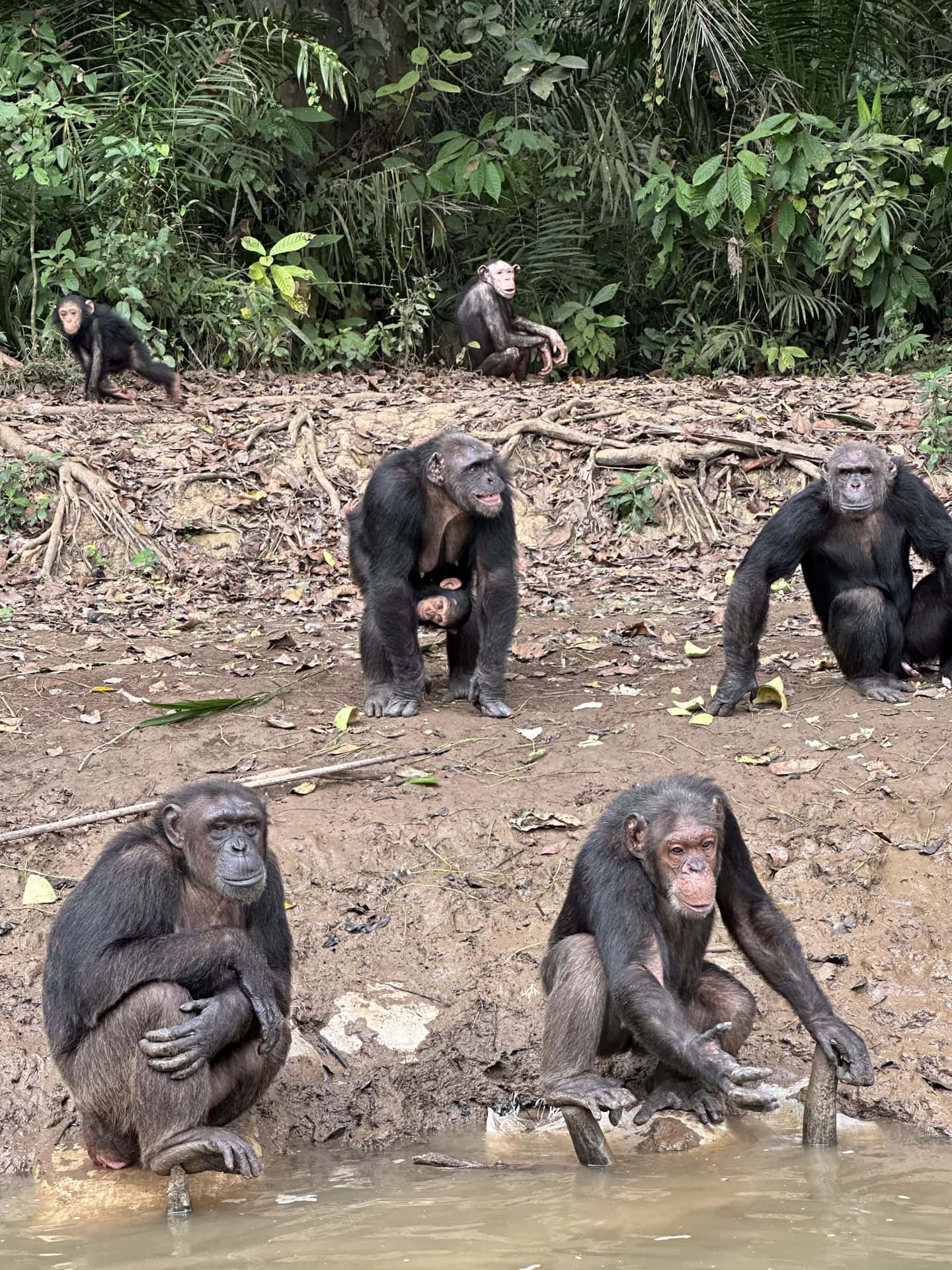
How and Where to Observe Chimpanzees in Congo?
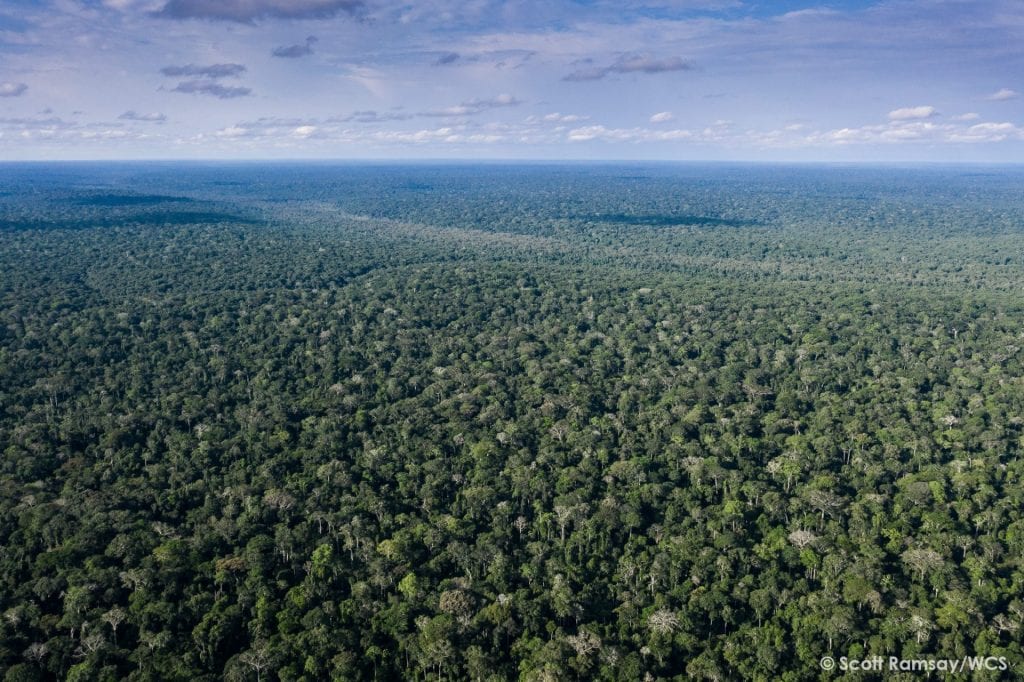
Observing chimpanzees in the forests of Congo is not a simple wildlife outing. The country hosts one of the highest densities of Pan troglodytes troglodytes throughout the Congo Basin, particularly in the Nouabalé-Ndoki – Goualougo Triangle – Ndoki Forest complex as well as in Odzala-Kokoua National Park, located in the northwest of the Republic of Congo. These areas offer unique conditions for how and where to observe chimpanzees in Congo, combining scientific immersion, safety, and authentic behavioral observation.
It is essential to note that chimpanzees and bonobos, though genetically close, show significant differences. Chimpanzees, more territorial and hierarchical, live in the northwest of the Congo Basin. Bonobos, more peaceful, social, and matriarchal, are primarily found south of the Congo River. This distinction is important to understand the distribution, interactions, and behaviors observed during expeditions of how and where to observe chimpanzees in Congo.
What does it really mean to observe chimpanzees in the Congolese context?
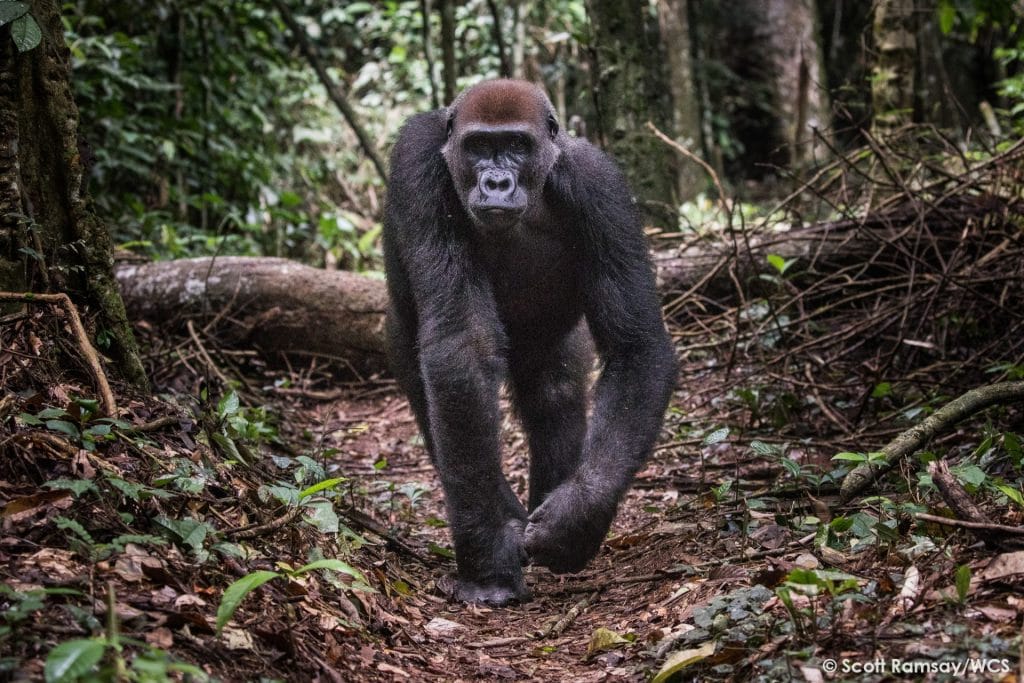
Observing chimpanzees in northern Congo means studying populations little habituated to humans, offering a perspective close to the first scientific observations. These chimpanzees use up to 35 plant species in their diet, build nests mostly over 20 meters high, and exhibit complex cultural behaviors, such as sequential tool use. Understanding how and where to observe chimpanzees in Congo allows one to perceive these behaviors in an intact primary forest, which is rare in Central Africa.
Where are the most reliable observation zones?
The main areas for how and where to observe chimpanzees in Congo include:
- The Goualougo Triangle (Nouabalé-Ndoki National Park): chimpanzees are semi-habituated and practice complex tool use.
- Central Ndoki Forest (Mongambe & Ndoki sectors): high density due to key fruiting species, scientifically monitored since 2002.
- Tchimpounga Sanctuary (Jane Goodall Institute): rehabilitation and education site for orphaned chimpanzees.
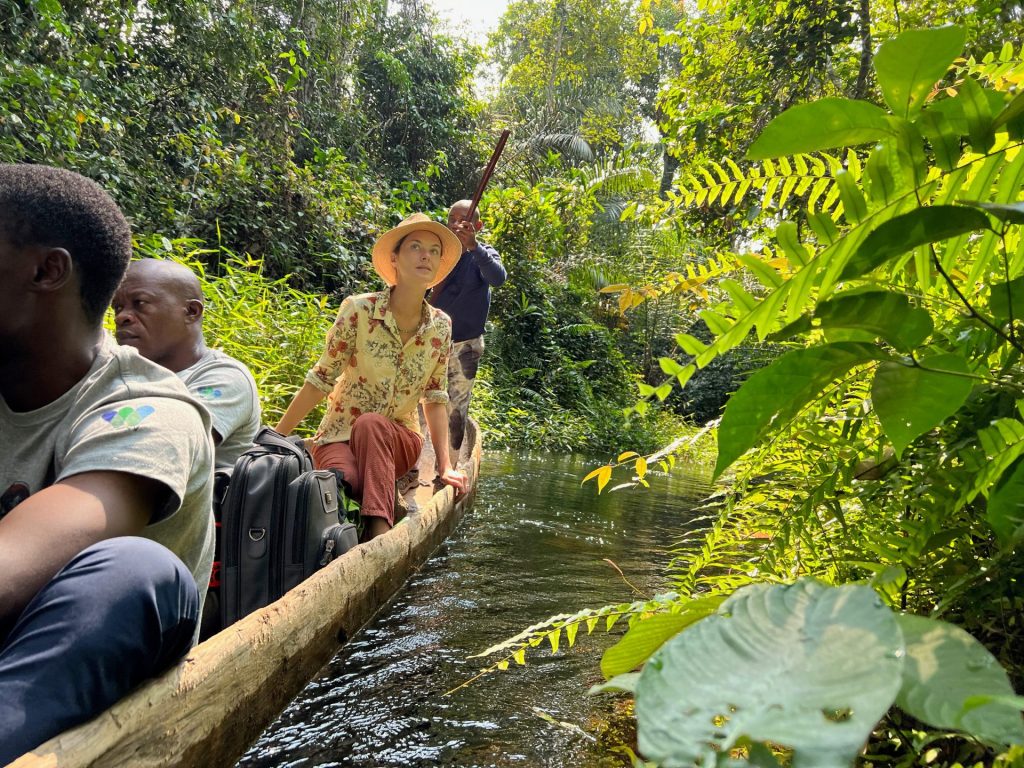
- Odzala-Kokoua National Park: offers authentic observation of wild chimpanzees in intact primary forests. Groups are monitored by experienced trackers, allowing observation of social life and movements without disturbance. In all these zones, local trackers and experienced guides are essential. Accustomed to the forest and chimpanzee movements, they know how to take the wind in the opposite direction to avoid alerting groups, interpret subtle animal signs, and guide visitors safely and pedagogically. Their expertise transforms the experience of how and where to observe chimpanzees in Congo into a scientific, respectful, and immersive adventure.
What is the best time to optimize observation?
The dry season, from December to February and June to September, favors observation. Chimpanzees concentrate in fruiting and swamp areas, increasing encounter probability by 30%. Understanding how and where to observe chimpanzees in Congo requires considering these seasonal movements and the phenology of key species.
How does scientific tracking work in the northern Congo forests?
Trackers, local experts, are accustomed to reading signs left by chimpanzees: nests, food remains, vocalizations. They take the wind in the opposite direction so as not to alert the groups. Guides then translate these observations to the visitors, explaining each behavior and interaction. This methodology highlights the crucial role of trackers and guides, making how and where to observe chimpanzees in Congo both safe and respectful. The experience showcases their ability to anticipate chimpanzee movements and ensure authentic encounters in their natural habitat.
Which researchers have shaped the study of chimpanzees in Congo?
Research relies on respected programs:
- Crickette Sanz: sequential tool use in the Goualougo Triangle.
- David Morgan: social dynamics and ecological niche.
- Sabrina Krief: self-medication and natural pharmacopoeia.
- Rebeca Atencia: rehabilitation at Tchimpounga.
Their work ensures that how and where to observe chimpanzees in Congo respects animal welfare.
How should one prepare to respect observation protocols?
Visitors must walk slowly, remain silent, maintain a minimum distance of 7 meters, and manage wind direction to avoid alerting groups. Equipment must be discreet and suitable for the forest. These precautions guarantee the safety and effectiveness of how and where to observe chimpanzees in Congo.
Why does observation directly contribute to conservation?
Each observation supports anti-poaching patrols, demographic monitoring, and educational projects. In this way, how and where to observe chimpanzees in Congo becomes a concrete tool for sustainable conservation.
What does one take away from this encounter in an intact primary forest?
Encountering a wild chimpanzee in northern Congo, whether in the Goualougo Triangle, Nouabalé-Ndoki, or Odzala-Kokoua, offers immersion in a complex and intact animal culture. Observing these behaviors in their natural environment transforms the perception of wildlife and makes how and where to observe chimpanzees in Congo a scientific and unforgettable experience.