

Bonobo tracking
SECURITY
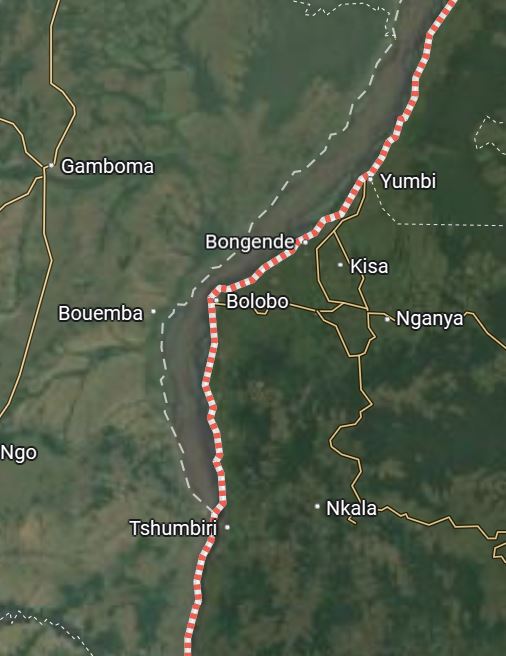
The site where we track the Bonobos is in the Democratic Republic of Congo, not far from the border with the Republic of Congo. It’s a very safe region that poses no security problems.
LEVEL
- Bonobos can move quickly through the forest, so tracking requires a certain level of physical fitness.
- At dawn, we will position ourselves under their nests and then follow them until they stop to feed.
Bonobo tracking
2 NIGHTS / 3 DAYS Country: Democratic Republic of Congo
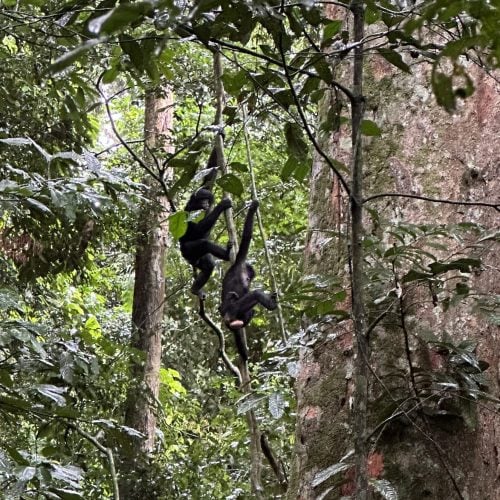
Bonobos are a rare and endemic species of chimpanzee from the DRC (Democratic Republic of the Congo). They are the genetically closest animal to humans, with genotypes that are 98.7% similar. Observing Bonobos in their natural environment is a particularly unique and rare experience.
Day 1 Transfer to Tshumbery
We leave Oyo early in the morning on 4×4 for a 3.5 hours drive to Mpouya (or 5 hours drive from Brazzaville). After completing the formalities on the Congo side, we embark on a large pirogue to cross the mighty Congo River to Tshumberi on the DRC side. We’ll complete some further formalities before mounting 4×4 for another 2h drive to reach our camp.
- Night at tented camp or site rooms
Day 2 Bonobo tracking
Early in the morning, we leave the camp and begin walking at 5 a.m. in the forest to witness the awakening of the semi-habituated bonobos. After our lunch at the campsite prepared by our cook, we’ll return tracking the bonobos as they move graciously from tree to tree. Following the locations of the Bonobos groups, the second tracking could be done in the afternoon of Day 1 or in the morning of Day 3.
- Night at tented camp or site rooms
Day 3 Transfer to Brazza or Oyo
After spending some memorable time tracking these fascinating apes, we’ll begin our journey back to Brazzaville by mounting 4×4 back to Tshumberi. We’ll cross the Congo River again and mount our 4×4 on the other side for a 5 hours drive to Brazzaville (or 3,5 hours drive to Oyo). We’ll arrive in Brazzaville in the late afternoon.
- Hotel and dinner not included. For best options, please contact us.
Bonobo tracking
2 NIGHTS / 3 DAYS Country: Democratic Republic of Congo
Bonobos are a rare and endemic species of chimpanzee from the DRC (Democratic Republic of the Congo). They are the genetically closest animal to humans, with genotypes that are 98.7% similar. Observing Bonobos in their natural environment is a particularly unique and rare experience.
Day 1 Transfer to Tshumbery
We leave Oyo early in the morning on 4×4 for a 3.5 hours drive to Mpouya (or 5 hours drive from Brazzaville). After completing the formalities on the Congo side, we embark on a large pirogue to cross the mighty Congo River to Tshumberi on the DRC side. We’ll complete some further formalities before mounting 4×4 for another 2h drive to reach our camp.
- Night at tented camp or site rooms
Day 2 Bonobo tracking
Early in the morning, we leave the camp and begin walking at 5 a.m. in the forest to witness the awakening of the semi-habituated bonobos. After our lunch at the campsite prepared by our cook, we’ll return tracking the bonobos as they move graciously from tree to tree. Following the locations of the Bonobos groups, the second tracking could be done in the afternoon of Day 1 or in the morning of Day 3.
- Night at tented camp or site rooms
Day 3 Transfer to Brazza or Oyo
After spending some memorable time tracking these fascinating apes, we’ll begin our journey back to Brazzaville by mounting 4×4 back to Tshumberi. We’ll cross the Congo River again and mount our 4×4 on the other side for a 5 hours drive to Brazzaville (or 3,5 hours drive to Oyo). We’ll arrive in Brazzaville in the late afternoon.
- Hotel and dinner not included. For best options, please contact us.
LEVEL
- Bonobos can move quickly through the forest, so tracking requires a certain level of physical fitness.
- At dawn, we will position ourselves under their nests and then follow them until they stop to feed.
SECURITY
The site where we track the Bonobos is in the Democratic Republic of Congo, not far from the border with the Republic of Congo. It’s a very safe region that poses no security problems.